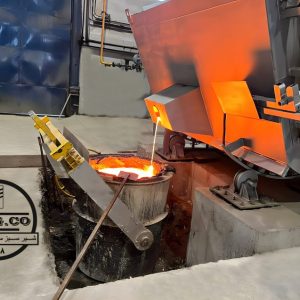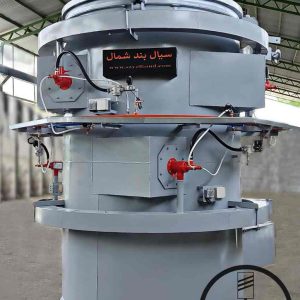


Enameling Furnace
Enameling Furnace
An industrial enameling furnace is designed for curing and fixing enamel and lacquer coatings on metal and ceramic components. By providing a controlled and uniform temperature, these systems enhance coating quality and improve resistance to corrosion, heat, and wear. Industrial enameling furnaces are ideal for high-volume production and precise thermal processing.
Key Features of Industrial Enameling Furnaces
-
Precise Temperature Control: PID control systems and thermocouples maintain uniform internal temperatures across all furnace zones.
-
High Thermal Efficiency: Advanced refractory insulation minimizes energy loss and increases overall thermal performance.
-
Uniform Heat Distribution: Ceramic heating elements and optimized burner design ensure even coating curing on all parts.
-
Flexible Design: Suitable for processing small to large components and adaptable to various industrial production lines.
-
Time and Thermal Cycle Control: Adjustable thermal profiles, ramp-up rates, and curing durations ensure consistent product quality.
Types of Industrial Enameling Furnaces
-
Batch Ideal for workshop-scale production and temperature-sensitive components requiring precise control.
-
Tunnel Furnaces: Designed for continuous and semi-continuous production lines with high throughput.
-
Rotary Furnaces: Suitable for high-volume parts that require uniform coating coverage.
Applications of Industrial Enameling Furnaces
-
Home Appliance Industry: Coating metal parts used in stoves, refrigerators, and kitchen equipment.
-
Automotive Industry: Enhancing corrosion and wear resistance of metal components.
-
Ceramics Industry: Firing enamel coatings on ceramic products and tableware.
-
Electronics Industry: Applying protective coatings to components and wires.
-
Decorative and Architectural Industries: Creating durable and aesthetically resistant colored coatings
Advantages of Industrial Enameling Furnaces
-
• Increased durability and extended product lifespan
-
• Uniform, high-quality coating results
-
• Reduced energy consumption through optimized thermal design
-
• Customizable configurations for different parts and production lines
-
• Stable and reliable performance in industrial environments